Lean Six Sigma Green Belt Certification
Improve the production process and minimize defects in the end product
Unlocking Success: The benefits of this course
Lear how to apply Scrum in the projects and to tailor Scrum in a particular scenario.
Gaing a standardized approach to problem-solving for continuous improvement in quality management
Aquire practical skills to implement Six Sigma and Lean tools
Learn techniques to improve production processes and reduce defects in the final product

Target Audience
This certification is suitable for employees and organizations seeking a standardized approach to problem-solving for continuous improvement in quality management.
Prerequisites
Preferably Six Sigma Yellow Belt (But not mandatory)
Certification Exam Format
- Multiple Choice
- 100 questions per exam
- One mark awarded for every right answer
- No negative marks for wrong answers
- Duration of 120 minutes
- Online proctored exam
- Current pass rate: 93%
Meet the experts
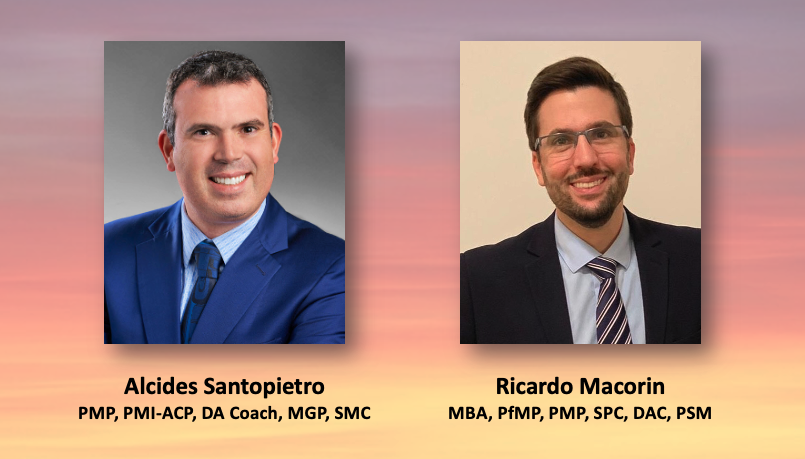
Alcides, a highly experienced Project Management professional with 20+ years of expertise, has a background in Industrial Engineering and a master's in project management. His training delivery prowess shines through as he has been designing and conducting Project Management training courses and exam preparatory sessions in diverse formats, languages, and countries for over a decade.
Ricardo is a highly accomplished Portfolio and Project Manager (PfMP | PMP) with 18+ years of experience in technology, innovation, and finance. He has successfully delivered projects and programs for Fortune 100 companies like P&G, Unilever, PepsiCo, Coca-Cola, and Deloitte. With a passion for learning, Ricardo has a proven track record of delivering training to over 1,000 students for companies and universities.
What you'll obtain in this course
Comprehensive study material covering Lean and Six Sigma methodologies
Practical application of tools and techniques in real-world projects
Certification exam to validate your expertise
Course Outline
Introduction to Six Sigma
1. History of Quality (Deming, Juran, JIT, Ishikawa, Taguchi, etc.)
2. Evolution of Six Sigma
3. Defining Six Sigma – philosophy and objectives
4. Overview of Six Sigma DMAIC process
Stakeholders & Setting up a Six Sigma Project
1. Identifying and Documenting stakeholder requirements
a. Identifying stakeholders and customers
b. Data collection and analysis
c. Determining critical requirements
2. 2. Project Selection Criteria
a. Identifying performance metrics
b. Using Financial criteria to evaluate project benefits
c. Maximizing project benefits for the organization
3. Project Planning
a. Creating Project Charter
b. Charter Negotiation
4. Managing Team Dynamics
a. Initiating teams
b. Stages of team evolution
c. Maslow’s hierarchy of needs
d. Motivation Techniques
e. Conflict Resolution Techniques
f. Management / Leadership styles
g. Roles played by people in a project
5. Important project management & planning tools
Six Sigma Methodology – Define
1. Inputs – Need for six sigma project, Executive management sponsorship, core team identified
2. Tools
a. Organization hierarchy
b. High level process maps
c. High level Pareto charts
d. Idea generation and categorization tools
3. Outputs
a. Project charter
b. Established metrics
c. Problem statement
d. Roles & responsibilities
Six Sigma Methodology – Measure
1. Objectives of Measure Phase
2. Inputs – the outputs of the Define phase
3. Tools
a. Data collection tools and techniques
b. Measurement scales
c. Validation techniques (Gauge R & R)
d. Statistical distributions
e. Data mining
f. Run charts
g. Process map
h. Stakeholder tools
i. Process costs
4. Outputs
a. Well defined processes
b. Baseline process capability
c. Process parameters affecting CTQs
d. Cost of poor quality (COPQ)
e. Measurement system
Six Sigma Methodology – Analyze
1. Objectives of Analyze Phase
2. Inputs – outputs of the Measure phase
3. Tools
a. Ishikawa diagram
b. Failure mode and effects analysis
c. Hypothesis testing
d. Process capability study
4. Outputs
a. Important causes of defects
b. Special and common causes of variation
c. DPMO and sigma level
Six Sigma Methodology – Improve
1. Objectives of Improve Phase
2. Inputs – outputs of the Analyze phase
3. Tools
a. Returns on investment
b. Solution design matrix
c. Design of experiment
d. Taguchi robustness concepts
e. Response surface methodology
f. Project planning and management tools
g. Prototypes
4. Outputs
a. Cost / benefit for different solution
b. Selection of solutions for implementation
c. Implementation plan
Six Sigma Methodology – Control
1. Objectives of Control Phase
2. Inputs – outputs of the Improve phase
3. Tools
a. Control plan
b. Statistical process control
c. Lean enterprise
d. 5S
e. Kaizen
f. Kanban
g. Total productive maintenance
h. Measurement system reanalysis
4. Outputs
a. Implemented solutions
b. Revised measurement system
c. Control plan for sustaining benefits
d. Improves process capability
e. Lessons learned
Lean
1. A Value Stream Map
2. Lean is Speed
3. Total Supply Chain
4. Lean Six Sigma Logistics
Case Study
1. Case Study Part 1
2. Case Study Part 2
3. Case Study Part 3
As a SCRUMstudy ATP, we provide you with the best learning experience.
Choose the best plan for you
Choose the best plan for you
Access to all videos
Access to study guides
Chapter tests and case study
High quality hands-on training
Certification exam fee included
Access to all videos
Access to study guides
Chapter tests and case study
High quality hands-on training
Certification exam fee included
Printed material delivered directly to your home
Frequently asked questions
Can t find an answer? Don t hesitate to reach out
The course is self-paced and you may take as long as you need to complete it. There is no time limit for completion.
You’ll have access to all courseware for one year after purchasing it.
Within 48 hours after you purchase the training, you’ll receive an email with all the information you need to have access to the courseware, as well as the communication methods to reach out to the experts who will support your studies until you pass your exam.
Yes! On the checkout page under the "Billing Information" section, switch from the Credit Card radio button to the PayPal radio button. Choose your country and click "Enroll in Course" to be directed to the PayPal checkout.
No, once you complete the purchase of your training, you’ll receive everything you need to study and pass the exam, including the voucher to take the exam at your discretion.